
Rainwater & Stormwater Tank Installation Auckland
Professional site preparation, ground excavation, compacted base foundations, downpipe capture connection, and overflow routing for rainwater tanks across Auckland.
Site Prep & Tank Placement
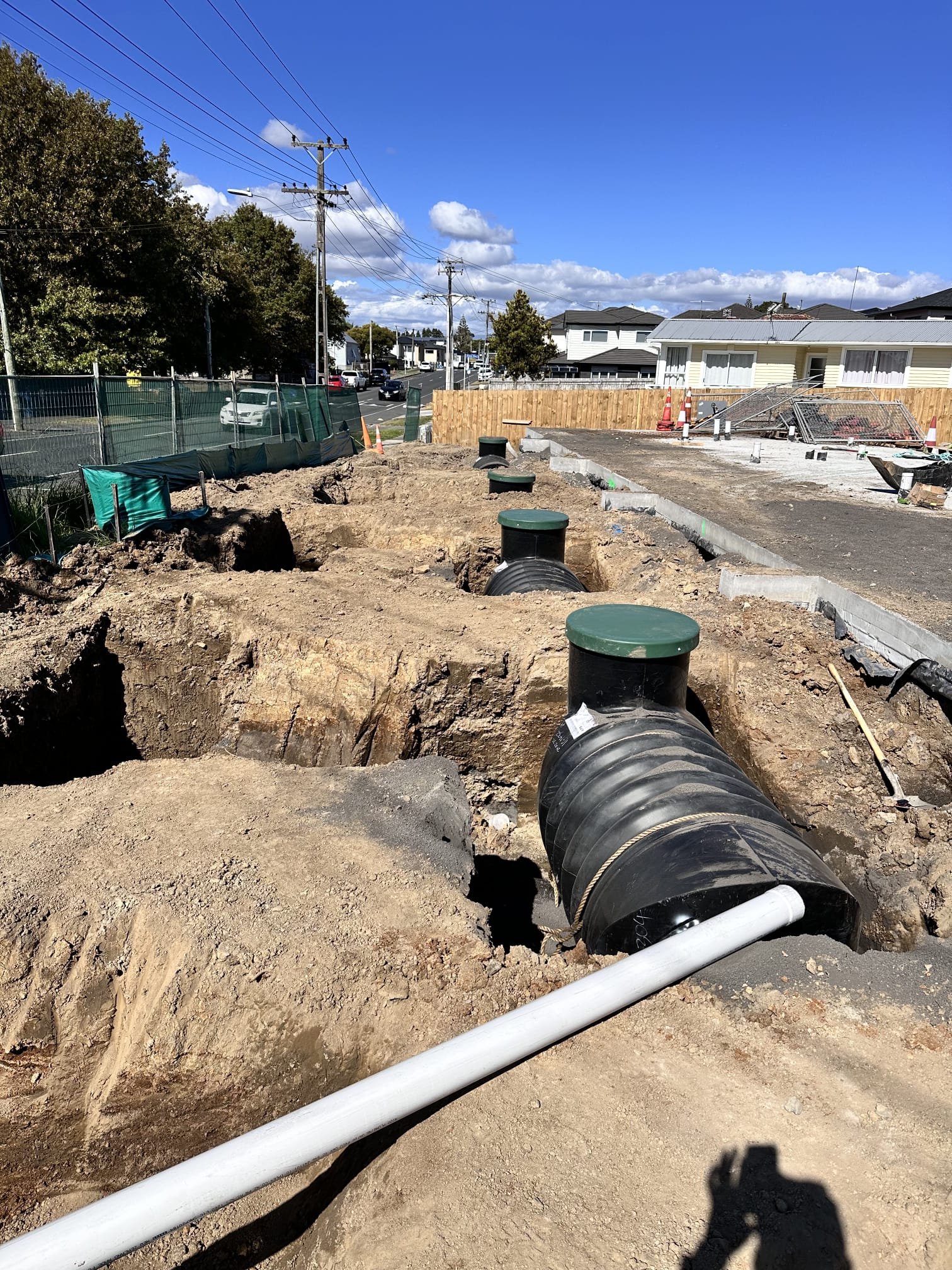
Precision ground excavation, level assessment, and engineered base compaction ensuring stable, balanced rainwater tank positioning.
- Compacted sand & GAP7 base foundations
- Careful excavation around existing utilities
- Residential & lifestyle property solutions
Pipework & Stormwater Tie-Ins
Seamless connection of roof downpipes to collection inlets, overflow routing to stormwater lines, and pump integration.
- Downpipe filter & inlet collection pipework
- Code-compliant overflow line routing
- Retention tank & detention setup
Rainwater Tank Installation for Auckland Properties
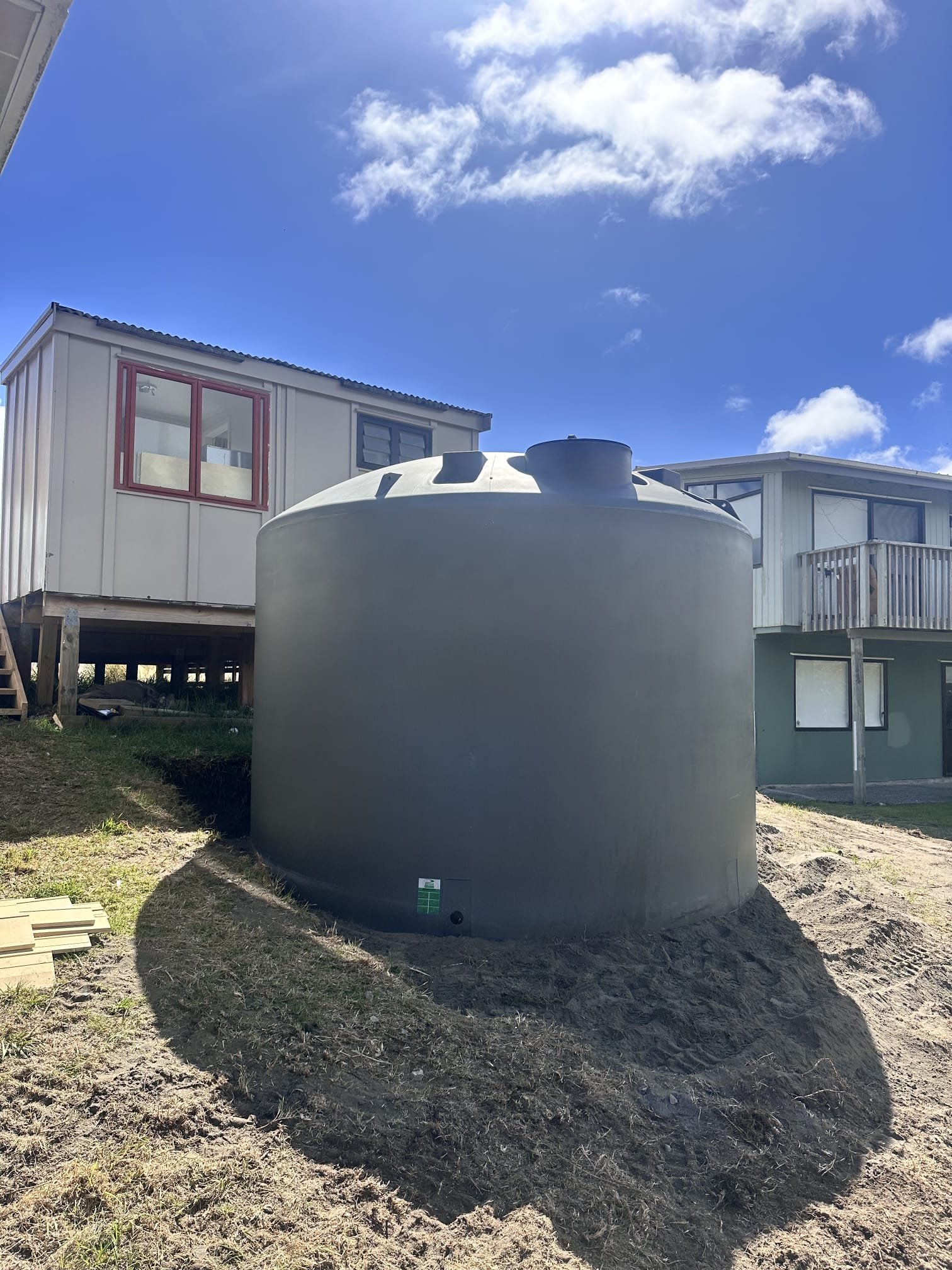
Setting up a rainwater tank involves site preparation, base compaction, positioning the tank, and connecting it to roof collection and overflow systems. Tanks are installed to harvest rainwater for garden use or to comply with Council stormwater management mandates.
At Craft Civil Contractors, we evaluate ground levels, access, tank size (5,000L - 30,000L), and connection points. Our services cover tank site excavation, base aggregate compaction, tank placement, first-flush diverter setup, overflow routing to stormwater drainage networks, and final testing.
We use compacted GAP20 foundations and industry-approved methods to ensure the tank is stable. Our licensed team maintains safety protocols while connecting pumps and pipework to meet Auckland Unitary Plan retention and detention requirements.
Consented Retention, Detention & Town-to-Tank Top-Up Systems
Properly installed rainwater tanks operate seamlessly within wider water networks. We take into consideration all aspects including proper pipe connections, correct falls, overflow routing, and stable base support. Our team installs both stormwater retention tanks (water reuse) and detention tanks (slow orifice release to reduce city flooding).
For customers seeking Town-to-Tank top-up connections via Watercare, we install testable Reduced Pressure Zone (RPZ) backflow prevention valves to safeguard public drinking water. We provide structured, affordable rainwater tank installation from preparation to final inspection.
Key Tasks & Focus Areas
- Site inspection and stormwater retention/detention planning
- Compacted GAP20 metal foundation base construction
- Poly and concrete tank placement (5,000L - 30,000L)
- Excavation for tank base and overflow trenching
- Inlet, outlet, and first-flush diverter plumbing
- Downpipe connection and collection leaf strainer setup
- Overflow pipe installation to stormwater main or soakhole
- Watercare Town-to-Tank top-up plumbing with backflow valves
- Submerged water pressure pump installation and testing
- Final connection inspection and site clean-up
Why Trust Craft Civil
- We have 15+ years of practical civil contracting and tank installation experience
- We ensure full compliance with Auckland Unitary Plan stormwater detention rules
- We construct compacted GAP20 foundations for stable, unyielding tank support
- We install testable backflow valves for Watercare Town-to-Tank connections
- Our careful level checks maintain accurate overflow pipe falls
- We offer competitive rates for residential, rural, and commercial installations
- Our communication stays clear throughout planning and completion
Our 4-Step Civil Execution Process
Every project follows a transparent, code-compliant delivery model engineered for Auckland conditions.
Site Assessment & GeoMaps Verification
We verify private-to-public point of connection boundaries using Auckland Council GeoMaps GIS records, inspect site levels, and locate existing underground utilities before digging.
Safe Excavation & Subgrade Bedding
Trench excavation is executed with safe shoring and utility clearance. We prepare trenches with graded GAP20 aggregate bedding to protect pipework against Auckland Waitemata clay ground movement.
Laser Alignment & Hydrostatic Testing
Pipework is laid to exact NZ Building Code Clause E1 (Surface Water) and G13 (Foul Water) gradients using dual-grade laser levels, followed by hydrostatic water pressure testing.
Backfill Compaction & As-Built Sign-Off
Backfilling is completed in compacted aggregate layers. We prepare scaled As-Built drainage plans and issue Producer Statement PS3 documentation for Auckland Council Code Compliance Certificates (CCC).
Frequently Asked Questions
What is the difference between a stormwater retention tank and a detention tank?
Do I need a building consent for a rainwater tank in Auckland?
What is a Watercare Town-to-Tank connection and what backflow prevention is required?
What foundation preparation (GAP20) is required for heavy rainwater tanks?
How do first-flush diverters and leaf strainers keep harvested water clean?
Planning a Stormwater Tank Installation?
Contact Craft Civil Contractors for base excavation, tank positioning & overflow pipework quotes.